

One sibling has been there every week. She’s sorted the medications, driven to the appointments, learned to read the subtle signs that Dad’s having a bad day. She knows the look on her father’s face when he’s in pain but won’t say so. She’s watched the slow, steady decline that only someone who sees him every day notices.
But when the family gathers to discuss hospice care, her sibling disagrees. He lives three states away and hasn’t witnessed the day-to-day struggles. “I’m not ready to give up on Dad.”
This is a struggle many families face. And it happens far more often than people talk about.
When a loved one is living with a life-limiting illness, the people who love them don’t always agree on what to do next. The whole family is grieving, but grief doesn’t always come out looking like grief. Sometimes it looks like stubbornness. Or silence. Or denial. Or a fight.
What do you do when you and your siblings disagree about hospice?
Understanding why siblings see things differently is the first step. Knowing how to move toward a unified decision is the next one.

Why Siblings Often See Things Differently
In most families, one person has been the primary caregiver.
They live nearby. They manage the medications and the appointments and the phone calls from doctors. They know what the last three months have actually looked like, because they lived them.
A sibling who lives far away loves just as much, but their experience is different. Maybe they’ve only seen the person on good days. They hold onto the version of their parent who was healthy and independent. And when hospice comes up, it can feel, to them, like the beginning of a reality they’re not ready to face yet.
Hospice isn’t about giving up. But it can feel that way, especially the first time it comes up.
Sometimes other dynamics show up too. Old family roles may resurface under stress. Feelings of guilt can push someone toward aggressive curative treatments because choosing to focus on comfort care feels like giving up. Different siblings may have had different conversations with the person who is ill, and they may genuinely believe different things about what their loved one actually wants.
None of this makes someone a bad person. The vast majority of the time, it’s an expression of grief and trying to do right by someone they love.

What Gets in the Way of a Good Family Conversation
Family meetings about serious medical decisions are challenging under the best of circumstances.
A few things tend to derail them:
- When emotions run the meeting instead of the patient’s wishes. When fear and grief are running high, the conversation can shift from “what does Mom want?” to “what are we each afraid of?” Those are very different discussions.
- No shared understanding of what hospice actually is. Many families have ideas about hospice that aren’t accurate. They may believe it’s “giving up.” They may fear that it means their loved one will stop receiving care (that’s a misconception, by the way). They may not know that hospice is specialized medical care focused on comfort, dignity, and quality of life.
- Unresolved family patterns. High-stakes decisions have a way of pulling old dynamics back to the surface. Birth order. Old resentments and conflicts. Who feels like their voice has always been heard, and who doesn’t. The conversation about care can get tangled up in personal grievances.
Recognizing these dynamics before the meeting starts doesn’t necessarily keep them from surfacing. But awareness can bring perspective and help everyone stay focused on the loved one’s needs.

How to Have a Productive Family Meeting
A productive family meeting about hospice isn’t really about getting others to agree with you. A meeting that matters shifts the focus back to the loved one and what’s best for them.
- Start with documented wishes, if they exist. If your loved one completed an advance directive, a POLST form, or any written record of their preferences, that document belongs in the room. It isn’t a tie-breaker in an argument. It’s a voice.
- Agree on the goal before the conversation starts. The goal isn’t “get everyone to agree with me.” The goal is to make a care decision that honors your loved one’s dignity and gives them the best possible quality of life. When everyone can agree on that goal, the conversation can have productive outcomes.
- Give everyone space to speak before anyone advocates. There’s a difference between sharing how you’re feeling and lobbying for a position. Let everyone name their fears and their grief before the group moves into decision-making.
- Ask what your loved one would say if they could hear the conversation. This question can often bring perspective.
- Bring in a neutral third party. Sometimes family members can’t move forward without someone outside the family helping facilitate. A hospice social worker can help facilitate and keep the conversation focused on your loved one.
When You Need Someone Outside the Family
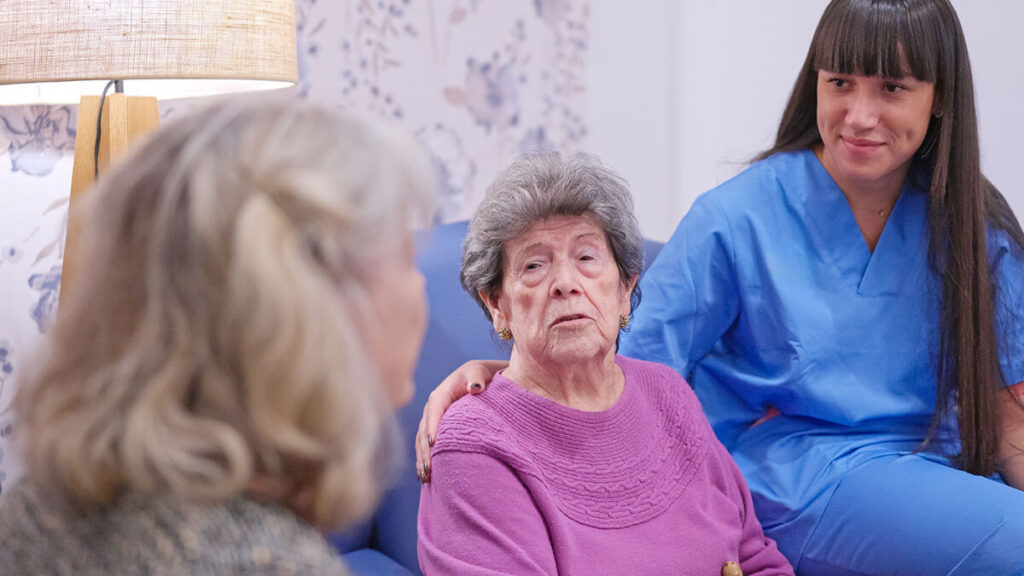
Sometimes, families struggle to reach a consensus. This is where a hospice social worker or chaplain can make an enormous difference.
Hospice social workers are trained specifically in family dynamics around end-of-life care. They’ve sat in hundreds of these conversations. They know how to hold space for grief and conflict at the same time, how to help a family find common ground without forcing resolution, and how to keep the focus where it belongs: on the person receiving care.
A chaplain brings a different and equally important kind of support. They help families process the spiritual and existential weight of these decisions, regardless of the family’s faith background. They’re trained listeners who don’t come in with an agenda.
Neither of them takes sides. Both are there to help.

What Hospice Actually Offers
Part of what makes sibling conversations about hospice so difficult is that people are often arguing about a version of hospice that isn’t accurate.
Choosing hospice means shifting the focus from curative treatment to comfort and quality of life. For someone whose illness has progressed to the point where curative treatment is no longer realistic or desired, hospice can be the most skilled, attentive, medically competent care they’ll receive.
Here’s what hospice care can look like in practice:
- Expert pain and symptom management from a team that specializes in end-of-life care
- Around-the-clock access to a nurse, every day including weekends and holidays
- Emotional and spiritual support for the whole family, not just the patient
- Social work services to help with logistics, decisions, and family communication
- Respite care that gives the primary caregiver a real break
- Bereavement support that continues for the family after their loved one passes
Hospice doesn’t measure success in days. It measures it in quality. In comfort. And in helping the whole family make the most of their time together.
When a family stops fighting about what comes next and starts focusing on the time they have, something shifts. Even when old tensions remain, something becomes possible that wasn’t before: being a family again, rather than a medical management team.
You Don’t Have to Navigate This Alone
If your family is in this difficult place (whether you’re the caregiver or the one who lives far away and is trying to understand), it’s important to understand your options. Reaching out to a hospice team early can get you the information you need.
At Envision Hospice and Home Healthcare, our team of social workers, nurses, and chaplains has been supporting El Paso families through exactly these conversations for 20 years. Our team of social workers, nurses, and chaplains cares for patients and supports the people who love them. .
If you’d like to talk through what hospice could look like for your family (or just ask questions), we’re here. Contact Envision Hospice, and let’s start the conversation.

Frequently Asked Questions
When siblings can’t agree on hospice for a parent, it helps to start by separating the emotional conversation from the medical one. A hospice social worker or family mediator can facilitate a structured family meeting that keeps the focus on your loved one’s wishes and quality of life. Many families find that when they share a common goal, some of the conflict becomes easier to navigate.
Hospice social workers are specifically trained in family communication around end-of-life care and can serve as a neutral facilitator when conflict arises. They help families clarify what hospice does and doesn’t mean and support family members who are processing grief in very different ways.
It’s common for people to have misconceptions about hospice, and it’s useful to reframe: hospice isn’t the absence of care; it’s a different kind of care focused on comfort, dignity, and quality of life. Many families who enroll in hospice say that it made their loved one more comfortable and it gave them more time to enjoy time together.
A productive family meeting usually includes any available documentation of your loved one’s wishes, a clear shared goal focused on their quality of life, and space for every family member to speak before decisions are made. Bringing in a neutral third party, like a hospice social worker, often helps when emotions are running high.
In hospice, the whole family receives support. Hospice care includes social workers, chaplains, and bereavement counselors who work with family members throughout the hospice journey and after. At Envision Hospice, that support doesn’t end when a patient passes. It continues for the people left behind.
Without an advance directive, the family and care team work together to make decisions based on the patient’s known values and wishes. A hospice social worker can help guide that process, and in some cases a hospital ethics committee or patient advocate can provide additional support. Having these conversations as early as possible (before a crisis) makes a significant difference.
Whoever holds healthcare power of attorney has legal decision-making authority when a loved one can no longer speak for themselves. If no power of attorney exists, state law typically determines the order of priority among family members. When multiple family members share the same level of priority, reaching agreement can be complex. A hospice social worker can help clarify that process and facilitate communication among family members who are struggling to align.
Hospice is voluntary and enrollment can be reversed at any time. If a patient or family decides they want to pursue curative treatment again, they can disenroll from hospice with no penalty and no permanent commitment. Many families find this reassuring when they’re weighing the decision.
Palliative care focuses on comfort and quality of life and can be provided alongside curative treatment at any stage of illness, while hospice is for people who are no longer pursuing curative treatment and have a life expectancy of six months or less if the illness follows its expected course. Both prioritize comfort and dignity, but hospice provides a more comprehensive team of support for patients and families in the final phase of life.